
 Hourly · 8 min read
Coordinating an As-Directed Chauffeur Itinerary
Coordinate an as-directed chauffeur itinerary with one approver, exact next-stop instructions, passenger and luggage updates, and a confirmed final return.
Read article→Plan a New York shopping itinerary with store appointments, entrance details, purchases and luggage, clear pickup updates and a confirmed journey home.
MOE
Nov 5, 2026

Finish the store visit and describe the full load before collection.
Two travellers leave their hotel with two suitcases and a modest shopping list. The first visit becomes a fitting, the next purchase needs different packaging and a third appointment cannot move. The useful transport plan is the one that still works after those changes, including the bags already travelling with them.
A private chauffeur for a New York retail itinerary can be considered around store appointments, collections and the journey back. Start with the tasks you need to complete, then connect them with practical entrance and pickup instructions. This guide focuses on the retail day itself; the booking confirmation establishes the transport arrangement.
Separate a booked fitting from a store you would simply like to visit. Ask the store about the appointment's arrival instructions and expected process. If a collection depends on an item being prepared, establish how you will learn it is ready before making that stop the anchor for the day.
Keep fixed commitments visible and optional visits easy to remove. A list of addresses alone does not tell the transport team which visit has priority when a fitting runs over. Add the purpose of each stop and its flexibility, without sharing payment details or unnecessary purchase information.
Mark the purpose and flexibility of each retail stop
Swipe to compare all columns →
| Type of visit | Settle with the store | Show in the transport brief |
|---|---|---|
| Confirmed appointment | Arrival window, contact and intended entrance. | The fixed commitment and any separate readiness update after the visit. |
| Purchase collection | Whether the item is ready and how it will be packaged. | The collection address, likely item dimensions and whether the traveller accompanies it. |
| Optional browsing | Any access or appointment requirement relevant to the visit. | That the stop can be shortened or omitted if priorities change. |
| Return or alteration | Required documents, item presentation and who handles the transaction. | The item travelling with you and the stop's place in the day. |
For example, place a fixed fitting and a confirmed collection in the working plan before deciding whether another browsing stop belongs between them. Have the proposed sequence reviewed against the actual addresses and commitments. This avoids presenting a preferred order as a guaranteed achievable schedule.
Record the store name, full address and the entrance intended for the appointment or collection. A general retail address may not identify the door used for a private appointment or prepared order. Where staff provide instructions, keep the latest version with that stop.
The store entrance and vehicle meeting point may differ. NYC DOT's parking guidance distinguishes passenger collection from merchandise loading. Its summary prohibits waiting under No Parking, No Standing and No Stopping restrictions; the permissions for loading merchandise and collecting passengers also differ. Posted signs and other applicable restrictions govern the location. Plan a practical handoff rather than assuming a retail purchase permits the vehicle to wait outside.
Pass a changed entrance instruction to the journey contact before relying on a different collection point. A storefront photograph can help identify the intended door, but it does not establish that the vehicle can stop there.
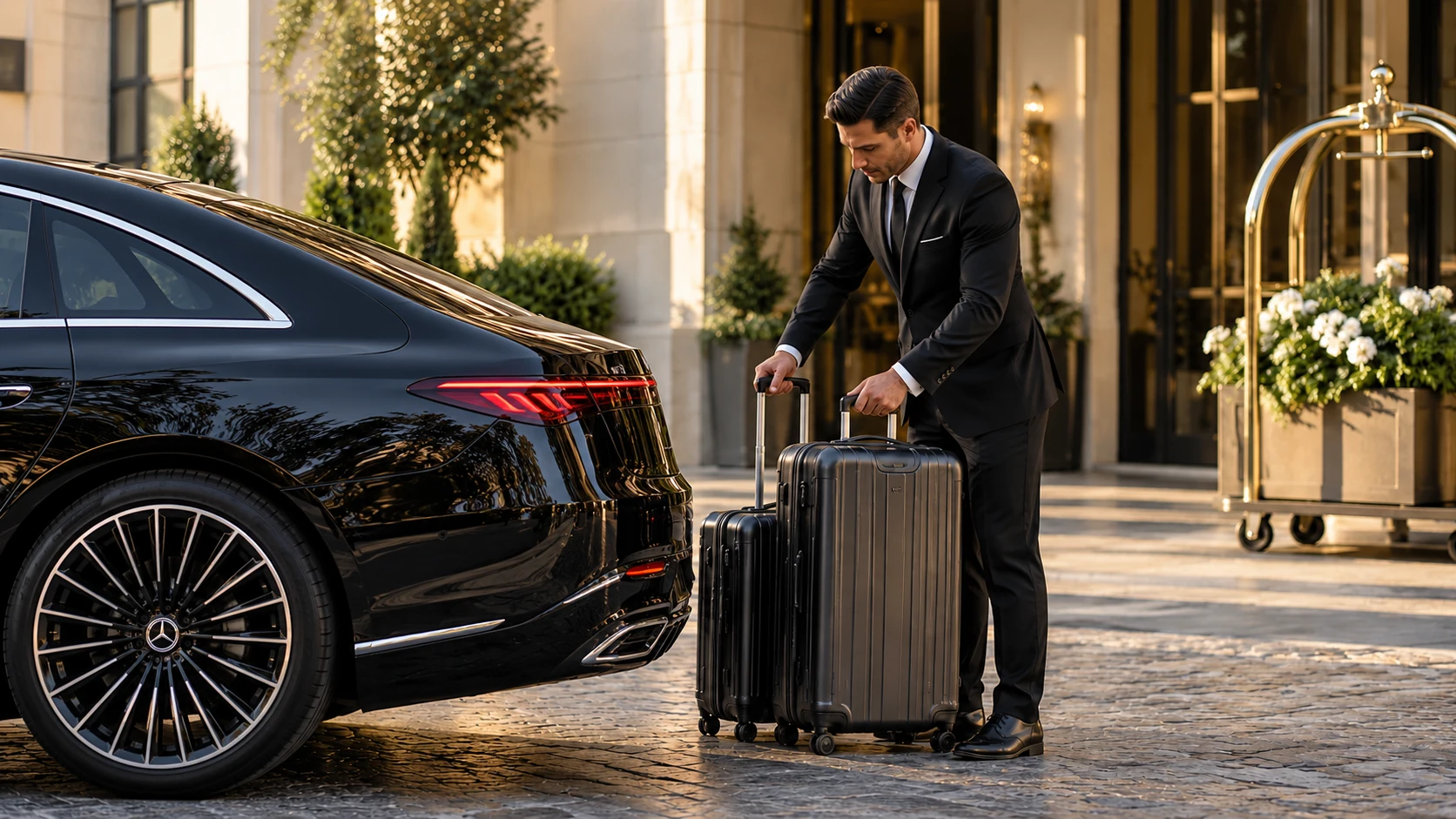
Begin with everything already travelling: passengers, suitcases, cabin bags and other items. Then describe the purchases you expect to add. Shopping bags vary in size and shape; do not convert a number of shopping bags into an assumed suitcase equivalent.
The offered 2026 Mercedes-Benz EQS limit is three passengers and two typical suitcases. The offered 2026 Cadillac Escalade IQL limit is five passengers and five typical suitcases. Both passenger counts exclude the chauffeur. Those figures do not determine whether an additional garment box, fragile purchase or several large shopping bags fit the proposed arrangement.
Illustrative load record: retain the original luggage at every stop
Swipe to compare all columns →
| Stage of the example day | Complete load to describe | Planning consequence |
|---|---|---|
| Hotel departure | Two travellers, two suitcases and their additional personal bags. | Establish the starting load before reviewing vehicle suitability. |
| After the first purchase | The same travellers and luggage, plus shopping bags with their actual sizes. | Review the added load; the original cases have not disappeared. |
| A bulky item is offered for immediate collection | All existing belongings plus the packaged item's dimensions and handling needs. | Resolve suitability or discuss another store-arranged option before relying on collection. |
If a purchase is larger than anticipated, pause the transport assumption before completing its collection arrangements. Ask the store about packaging and any delivery or later-collection options it actually offers. Ask the transport team to review the changed load. Neither question establishes that a particular solution is available.
A hotel stop to leave purchases is also a journey change. Include it in the plan for review, and settle with the hotel who will accept the items. A transport reservation alone does not establish storage or custody of purchases while you continue shopping.
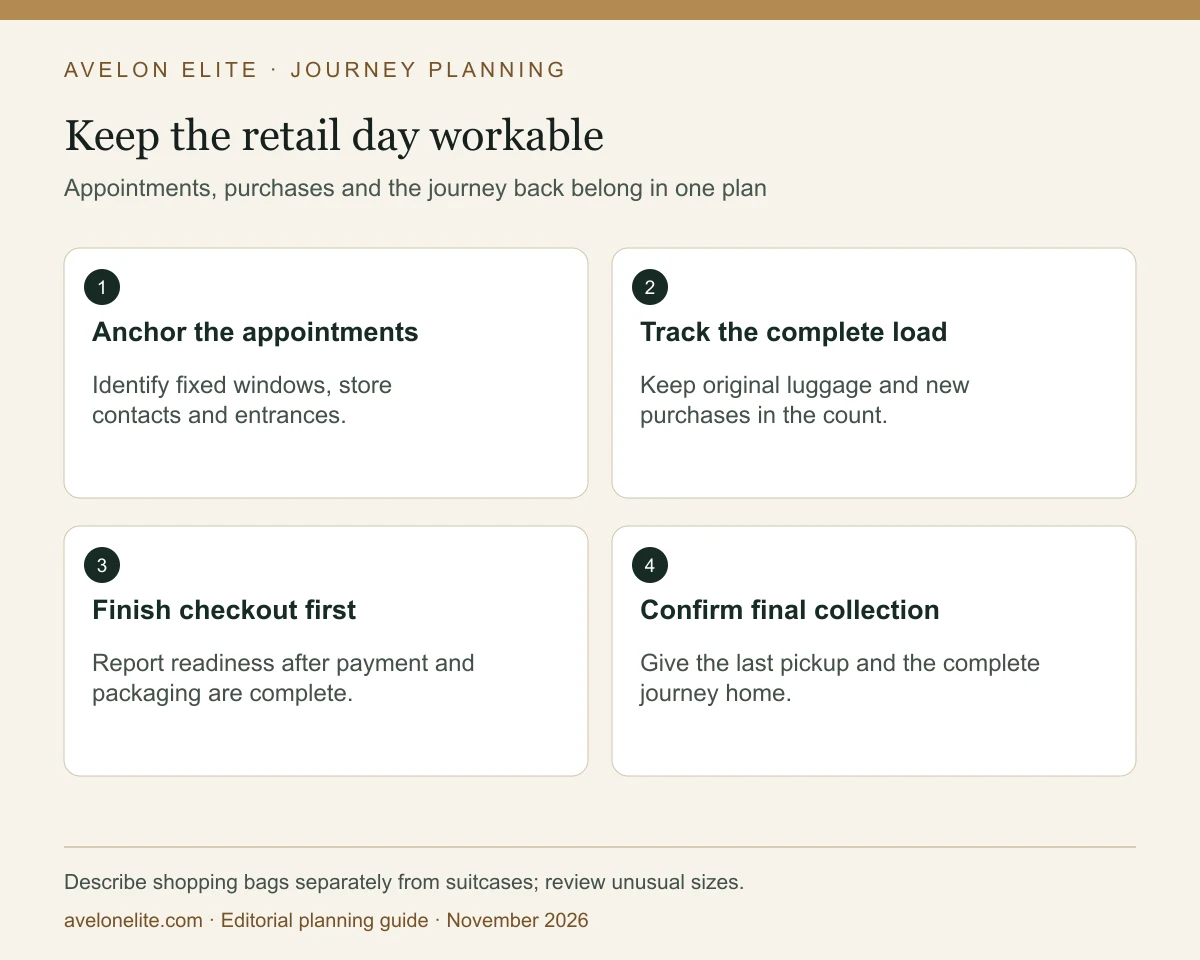
Anchor the appointments: Identify fixed windows, store contacts and entrances. Track the complete load: Keep original luggage and new purchases in the count. Finish checkout first: Report readiness after payment and packaging are complete. Confirm final collection: Give the last pickup and the complete journey home.
“The fitting is finished” and “we can leave” are different updates. The party may still be paying, waiting for packaging or collecting an item from another counter. Give the journey contact a factual status rather than requesting collection while those tasks remain open.
A useful message is: “Both travellers have completed checkout and have their belongings. We are ready to follow the agreed pickup instructions; the added bags are as discussed.” Send it only when accurate. If the load has changed, report that change first rather than treating it as a boarding surprise.
When a store visit overruns, identify the next fixed appointment and the optional stop you would prefer to remove. That gives the booking contact a specific revision to review. It does not authorise an unconfirmed extension or establish that the remaining appointments can still be reached as originally planned.
Agree the retail tasks directly with the store and keep the necessary receipts or collection references accessible to the person completing them. Describe the chauffeur request as transport; personal shopping, handling a return, carrying purchases through a store or accepting custody are separate tasks whose inclusion should never be inferred.
Assign the retail task before the transport handoff
Swipe to compare all columns →
| Task | Who should settle it? | Information useful for transport |
|---|---|---|
| Fitting, purchase, payment or return | The shopper and the store. | Appointment window and likely completion status, without payment details. |
| Packaging and release of an order | The buyer and the store's relevant contact. | When it is ready, packaged dimensions and collection entrance. |
| Vehicle pickup after the visit | The traveller and the agreed journey contact. | Party readiness, complete load and current meeting instructions. |
| Storage or delivery outside the booked journey | The traveller and whichever provider agrees to that task. | Any resulting change to the passenger journey. |
State where the day ends, including any intended hotel stop before a later commitment. If you need a separate timed return collection, include it explicitly. The end of the last appointment is not automatically the end of the transport requirement.
Consider an hourly chauffeur enquiry when time between visits forms part of the request. For charging boundaries, minimum-period questions and extensions, use the hourly hire planning guide. This retail brief should add the appointment priorities, store doors and changing load that make your particular day workable.
Do not assume an equivalence. Describe their number, dimensions and any special handling needs alongside the original luggage so the full load can be reviewed.
This guide describes a transport request. Arrange appointments with the stores or a separately engaged shopping professional; do not infer that appointment booking is included.
Discuss the specific requirement before relying on it. The transport confirmation should not be treated as a storage or custody agreement.
Report the updated status, next fixed commitment and proposed change. Obtain the revised transport arrangement rather than assuming optional stops or extra time remain available.
Only rely on the confirmed scope. Give the intended final destination and any later return pickup when requesting the day.
With the appointments, entrances and complete load ready, plan your New York retail journey. For an evolving shopping day or an unusual purchase, send the details for review before treating the transport plan as settled.
Avelon Elite Chauffeur Dispatch
From executive airport arrivals at JFK, LGA, and EWR to private tarmac transfers at Teterboro (TEB), our white-glove chauffeurs ensure seamless, punctual transit.
More from the Blog
Hourly · 8 min readCoordinate an as-directed chauffeur itinerary with one approver, exact next-stop instructions, passenger and luggage updates, and a confirmed final return.
Read article→ Hourly · 8 min read
Plan hourly chauffeur travel in New York around the booked start, time at stops, final return and extra-time terms. Use a practical time ledger.
Read article→ Fleet · 7 min read
Plan New York group chauffeur travel with clear meeting points, passenger and luggage counts, a lead traveller and a realistic plan for changes.
Read article→